Parking
The game’s prebuilt garages, by the numbers
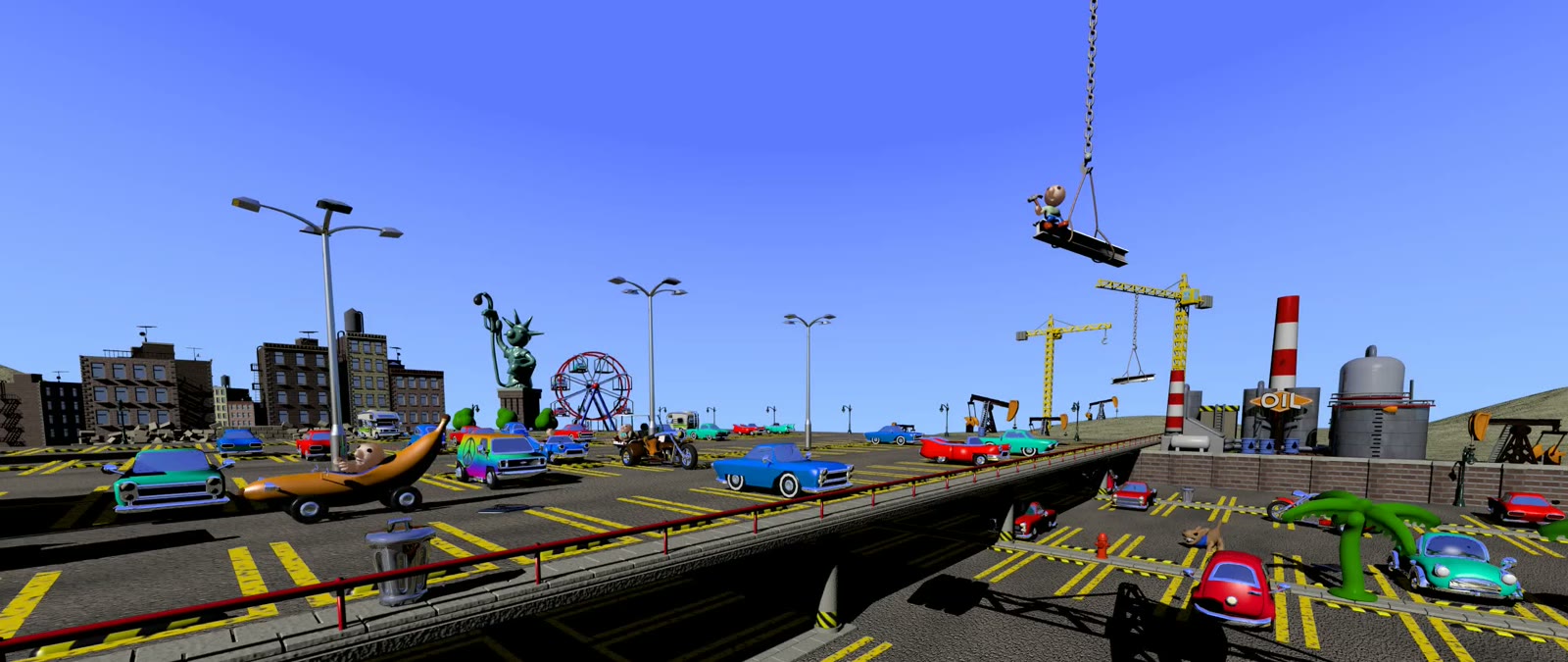
The game includes seven parking garage and deck plans. They range from a 49-bay brick deck to a 419-bay six-level garage, and each one already includes its parking bays, entrances and exits. Use them as a capacity reference before you plan a multi-storey lot.
Can you build a parking garage in Car Park Capital?
Yes, through the garage and deck plans included with the game. They are complete structures with parking bays, entrances and exits, not a single generic garage box. The seven plans cover different footprints and heights; pick one that fits the plot and the demand rather than assuming the largest is best.
| Plan | Footprint | Levels | Bays | Entrance / exit | Bay + barrier cost | Cost / bay |
|---|---|---|---|---|---|---|
| Large Parking Garage | 29×16 | 6 | 419 | 2 / 3 | $43,400 | $104 |
| Medium Parking Garage (brick) | 12×17 | 4 | 128 | 1 / 1 | $13,400 | $105 |
| Concrete Parking Deck | 10×15 | 4 | 121 | 1 / 1 | $12,700 | $105 |
| Medium Parking Garage (concrete) | 21×22 | 3 | 117 | 3 / 1 | $12,900 | $110 |
| Skewed Parking Garage | 20×14 | 4 | 96 | 1 / 1 | $10,200 | $106 |
| Bubble Garage | 10×10 | 4 | 69 | 1 / 1 | $7,500 | $109 |
| Small Brick Parking Deck | 10×10 | 3 | 49 | 1 / 1 | $5,500 | $112 |
Footprint is width × depth in tiles. Bay + barrier cost counts parking bays at $100 and every entrance/exit at $300. Walls, floors, ramps, lamps and signs are extra; the plans do not carry a single all-in price.
What the cost per bay tells you
The largest plan is not automatically the cheapest per bay. The 419-bay garage comes to about $104 per bay in bays and barriers; the 49-bay deck comes to about $112. The difference is small because every plan uses the same $100 bay and $300 barrier, but the barrier count changes the daily bill much more than the per-bay build cost.
Read the last column with the entrance/exit column. A plan with five barriers can be cheap per bay to build and expensive per day to run. That is the trade the table is meant to expose.
What the table tells you
- The largest plan is not always the best plan. Large Parking Garage holds 419 bays over 6 levels, but it also needs 2 entrances and 3 exits and a large footprint.
- Small footprints can still stack. Small Brick Parking Deck uses a 10×10 footprint and still fits 49 bays over 3 levels.
- Bays per level is the useful comparison. A plan with 30 bays per level and one entrance is easier to fill than a plan with 70 bays per level and the same road access.
- Barriers are a daily cost. Every entrance and exit costs $400/day, so a plan with five barriers pays $2,000/day before a car parks.
Garage or ground lot?
Use a garage when the demand is high and the land is tight. Use a ground lot when the plot is cheap, the demand is moderate, or you need the simplest possible route check. A garage does not remove the need for a road: every entrance and exit still needs road on the outside and asphalt on the inside.
How much does a parking garage cost?
Start with the bay and barrier bill. A 49-bay deck costs $5,500 in bays and barriers; the 419-bay garage costs $43,400. That is not the full build: walls, floors, ramps, pillars, lamps and signs are separate pieces. The barrier bill continues every day at $400 per entrance or exit.
Which plan fits which scenario
Baldtown City is the tightest test. The office towers create demand, but the land around them is expensive. The Small Brick Parking Deck and Concrete Parking Deck are the useful starting shapes because they keep a 10×10 footprint and still stack 49 or 121 bays. A 419-bay garage in the city center only makes sense when the surrounding offices and shops can actually fill it.
The Pyramids of Giza has more open ground, but the tourist flow is concentrated around the landmark. Put the garage on the road that serves that flow, not in the empty desert. The Large Parking Garage can hold a crowd, but its five barriers cost $2,000 a day; the Medium plans are easier to fill while the attraction is still growing.
Gulf of Freedom spreads demand across islands and beaches. A narrow deck beside the beach road is usually better than a giant garage on a distant island. Boat cars change the route, not the parking rule: the garage still needs road at every entrance and exit.
The barrier bill is the hidden cost
Bays are a one-time purchase; barriers are a daily bill. The Large Parking Garage has 2 entrances and 3 exits, so it pays $2,000 every day before a single car parks. The 128-bay Medium has one entrance and one exit, so it pays $800. At the same occupancy, the smaller barrier count can leave more net profit even though it holds fewer bays.
Before choosing the largest plan, divide the barrier bill by the number of cars you expect. A 419-bay garage at 30% occupancy still pays the same $2,000; a 49-bay deck at 70% pays $800. The fee calculator turns that difference into daily net and payback.
Why is my garage empty?
A garage does not create demand. If the plot has no office, store, beach chair or other destination inside the demand radius, the bays stay empty no matter how many levels you stack. Check the heatmap before blaming the fee.
If the demand is there, check the route. Every entrance and exit needs road on the outside and asphalt on the inside. A garage with one blocked barrier can look complete and still take no cars. Finally, check the fee against Carbrainess; a high fee turns drivers away before they reach the ramp.
Before you place a garage
- Road outside every barrier. An entrance or exit with no road outside is a wall with a sign.
- Asphalt inside every barrier. The car needs a paved tile on the inside face or it cannot cross.
- Demand inside the radius. A garage does not create demand; it only stacks bays on a plot that already has a reason for drivers to visit.
- Barrier count you can fill. Five barriers are not better than two when the lot is half empty.
- Budget for walls and floors. The table prices bays and barriers only; the structure is extra.
How to use a plan
- Pick the plan by footprint and bays. Start with the smallest plan that covers the demand in the radius.
- Check the entrances and exits. More barriers help a large garage, but each one needs road and adds $400/day.
- Put the plan on a high-demand tile. A garage in a low-demand area is an expensive empty building.
- Run the fee numbers with the bay count. The parking fee calculator uses the same 900-unit day and $400 barrier upkeep.