Parking
The heatmap is a location answer, not a profit answer
Parking demand is local. A store, an office desk or a beach chair pulls cars toward it; a bus stop, a junkyard or a refinery pushes them away. The heatmap shows the result on the map, and that is the first thing to check before buying land.
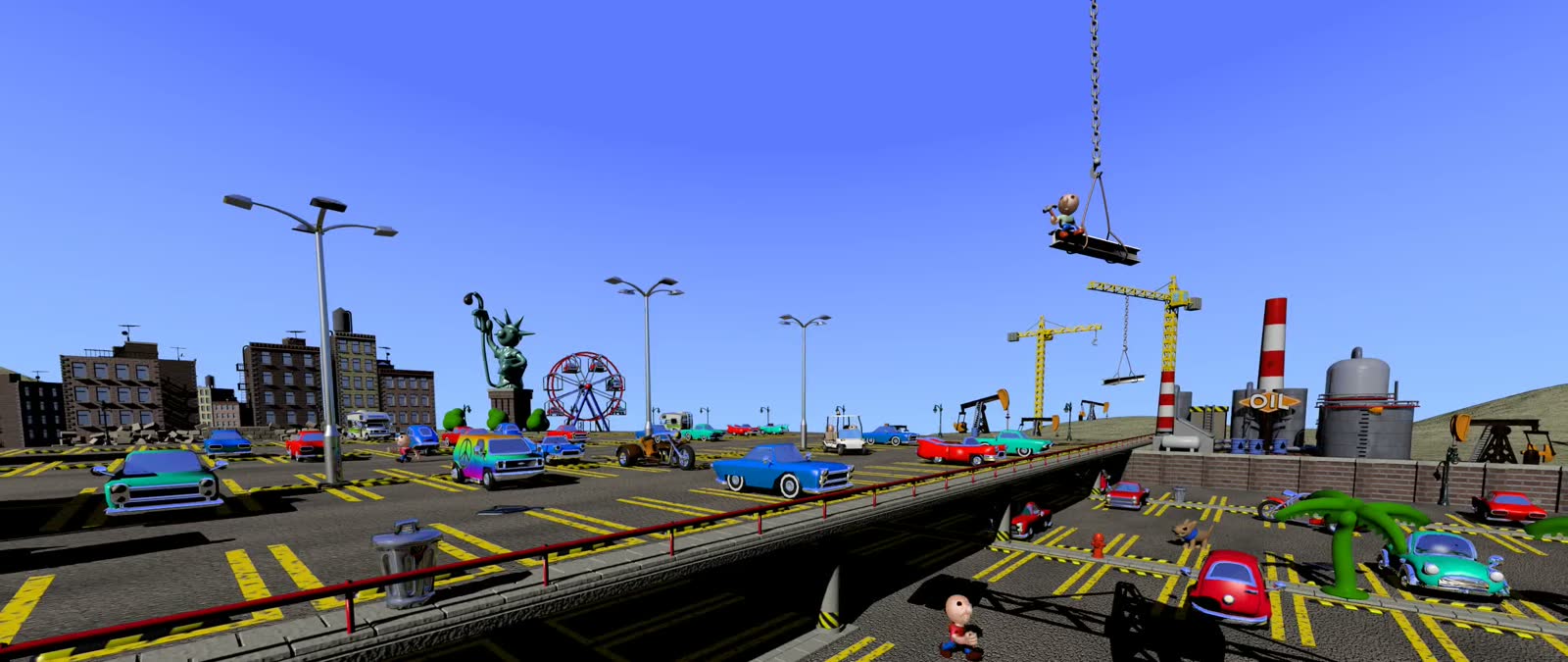
What adds demand
| Building | Demand | Radius | Best use |
|---|---|---|---|
| Big-box grocery or hardware store | +48 | 24 | The strongest common anchor for a paid lot. |
| Diner | +48 | 24 | A destination that also feeds the food need. |
| Office desk | +2 | 48 | Small per desk, but a whole tower adds up. |
| Park bench / beach chair | +8 | 12–20 | Cheap top-ups around a lot. |
| Parking demand source | +16 | 48 | Scenario-only object; not in the normal build menu. |
What removes demand
| Building | Demand | Radius | Why it matters |
|---|---|---|---|
| Pumpjack | −550 | 16 | The strongest local penalty. Keep industry away from a paid lot. |
| Oil refinery | −550 | 20 | The same penalty over a larger area. |
| Junkyard | −200 | 12 | Needed for wrecks, but not beside your best lot. |
| Protest banner | −200 | 16 | Temporary; disappears after about ten minutes. |
| Bus stop / subway entrance | −50 | 14 | Public transport pulls drivers out of cars. |
How to pick a plot
- Open the heatmap before buying. Look for a red or orange patch beside a destination, not a yellow patch in the middle of nowhere.
- Check what is inside the radius. A big-box store’s 24-tile radius is generous; a bench’s 12-tile radius is not. Put the lot inside the strong source’s circle.
- Check what is pushing the other way. A pumpjack 16 tiles away can cancel a store. Zoom out before you commit.
- Check the road. A high-demand plot with no road access is still a dead lot. The entrance and exit need road on the outside face.
- Check the land price. The heatmap does not include land. A cheap plot with medium demand can pay back faster than an expensive plot with high demand.
How to read the heatmap
Read the colour in three passes. First look for the strongest red or orange patch: that is where the destination is pulling cars. Then trace the edge of the patch; the lot must sit inside that circle, not beside it. Finally look for cold spots inside the same area: a pumpjack, refinery, junkyard, bus stop or banner can cancel the destination even when the centre looks hot.
The heatmap does not show land price, road access or your fee. A red tile is permission to investigate, not a promise of profit. A yellow tile beside a cheap plot and a good road can beat a red tile that costs too much to buy.
When demand looks high but the lot stays empty
- The lot is not closed. A gap in the barrier line means the game does not treat it as a car park.
- The entrance or exit faces the wrong way. The arrow must point into the lot for the entrance and out for the exit.
- The fee is above the local safe rate. Drivers reach the barrier and turn around; the heatmap still looks good.
- A bus stop or subway entrance is inside the radius. Public transport pulls drivers out of cars even when the destination is strong.
- A pumpjack or refinery is nearby. Their −550 penalty is stronger than most destinations.
Demand is not profit
A high-demand lot can still lose money if the fee is above what drivers pay, if the lot is half empty, or if the barriers cost more than the cars bring in. Demand tells you a car wants to be there; the fee and occupancy decide whether it pays.