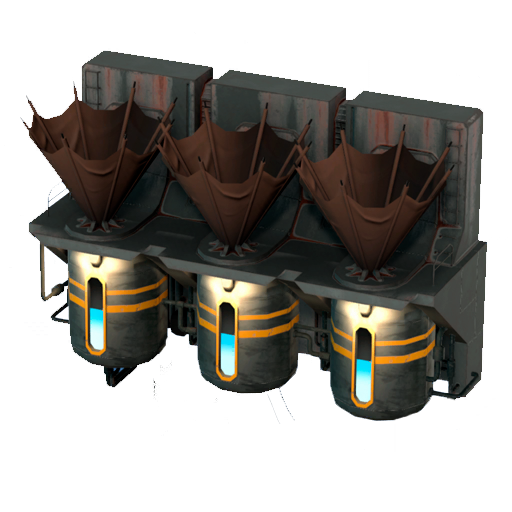
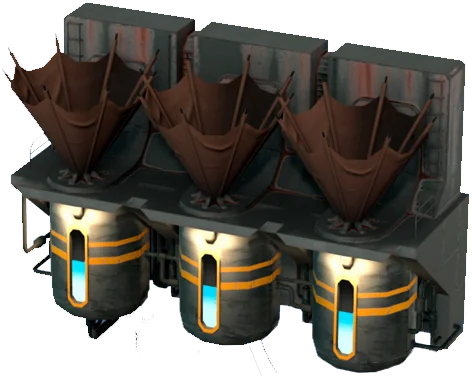
A collector on the wall can still leave the colony thirsty. A Raincatcher needs 5 power and its water output changes with weather. When it is able to run, its starting rate is 7 water per game hour; Dew capacitors I and II start at 3 and 6. First find out whether the building stopped, then compare incoming water with what the colony uses.

Check whether water arrives
Open the collector’s status and watch the actual water production or stock change. If it is stopped, use its displayed warning to fix the cause first.
Diagnose a stopped collector →Compare the current rates
When water arrives but stock still falls, compare the water coming in with the amount used. The supply planner can compare another source and more residents. Raincatchers can work through the day; Dew capacitors work from 6:00 to 20:00. Weather and power still decide what arrives.
Calculate the current gap →Plan for a dry period as a scenario
Open the supply planner’s comparison section and enter an assumed dry-period net change, or a lower production figure if you can read both rates. See when your chosen reserve would be reached. This tests your assumption; it does not predict the next rain.
Collector stopped, or demand higher than supply?
These lead to different fixes. If the Raincatcher has a road, grid or power warning, restore that building first and watch whether water actually arrives. If the collector runs but stock still falls, compare production and use in the resource panel. Another collector helps only when it can operate and its output is enough to close that measured gap.
How to turn falling stock into a decision
Suppose your panel shows 70 water, you want to keep 25, and the net change is −15 per game day. The 45 water above your reserve lasts three game days if that rate holds. Enter those readings in the supply planner, then try a lower dry-period rate as a separate scenario. The result is a planning window; it is not a weather forecast.
Raincatcher and Dew capacitor are not interchangeable
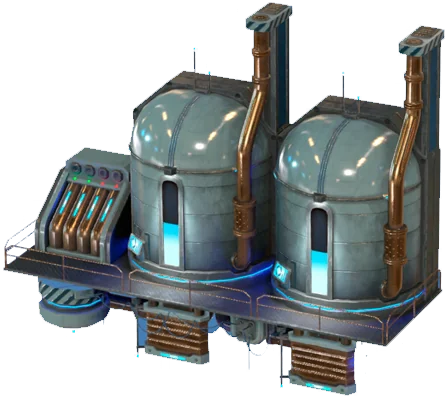
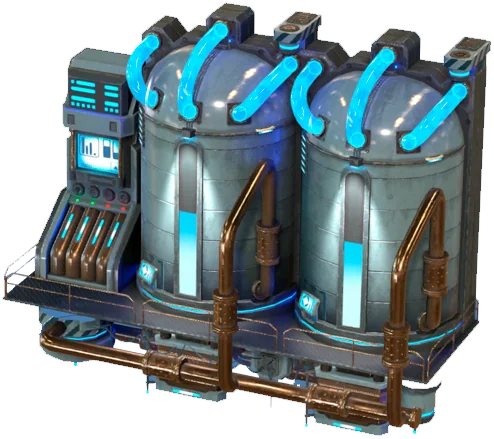
A running Raincatcher starts at 7 water per game hour, while Dew capacitors I and II start at 3 and 6. Dew capacitors list a 6:00–20:00 work window. Raincatcher output depends on weather. Compare what these buildings could produce, then use the live panel to see what reaches this colony right now.
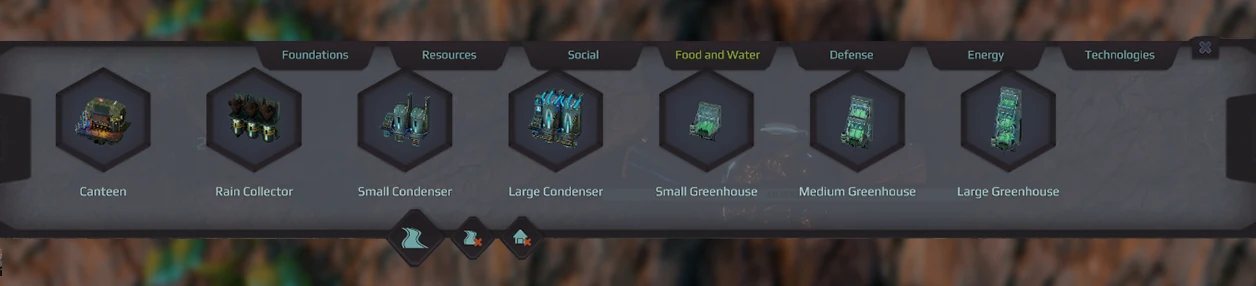
Water source comparison: Raincatcher and Dew capacitors
These are the starting figures recorded for the water buildings. A listed rate is a comparison point, not a promise of what reaches the colony in the current weather.
| Source | Starting rate | Work window or condition |
|---|---|---|
| Raincatcher | 7 water per game hour | 5 power; can work through the day, but rain and weather change collection. |
| Dew capacitor I | 3 water per game hour | 6:00–20:00; 14 game hours in that window, about 42 water at the listed rate. |
| Dew capacitor II | 6 water per game hour | 6:00–20:00; about 84 water across the same 14-hour window at the listed rate. |
| Reserve estimate | (stock − reserve) ÷ net loss | Example: 70 stock, 25 reserve and −15 per game day reaches the reserve in about 3 days. |
Check power and the live water panel after a building starts. If the actual output is zero, diagnose the building before comparing another source.
Raincatcher built, water still falling: what to compare
Why am I short of water with a Raincatcher built?
First check whether the Raincatcher is stopped: it needs 5 power, and weather can limit collection. If it is running, compare its actual water income with the colony’s use. A working collector can still produce less than demand, which is a different fix from a stopped one. Diagnose the collector →
Is a Dew capacitor better than a Raincatcher?
They are not interchangeable. A running Raincatcher starts at 7 water per game hour and depends on weather. Dew capacitor I starts at 3 and tier II at 6, but both work only from 6:00 to 20:00. Compare the current conditions and power, then read the live water panel.
How long until my water reaches the reserve?
Use the water above your reserve and the current net loss. If you keep 25 of 70 water and lose 15 per game day, the reserve is about three game days away at that rate. Enter your own readings in the supply planner; the result is a planning window, not a weather forecast. Test your water readings →
Rain and other conditions can change actual water output. Check the panel again when the conditions change; this guide cannot tell you when the next rainfall starts.