Character viewer
DDLC Sprite Viewer: Faces, Poses and Backgrounds
Choose a member, then a letter from A to F. The sprite changes on a game background, and the pose you settle on can open in the dialogue generator with the same settings.
Preview a sprite on a scene
The stage keeps the character, face, pose and background while you change one at a time, so the comparison stays honest.
 Sayori · B · Standing
Current selection
- Character
- Sayori
- Expression
- B
- Pose
- Standing
- Background
- Clubroom
The stage stays in place while you change settings, so you can compare faces without scrolling.
Character
Expression
Background
Every frame below is an ordinary sprite from the game. Distorted, injured and story-specific expressions are not included. · 36 frames
Six letters, six usable faces
The letters are slots in the game’s art, not fixed emotions. The same letter can look different on another member, so check the thumbnail before committing.
| Letter | What to look for | A line it suits |
|---|---|---|
| A | Eyes open, mouth closed or barely parted. The calm baseline for every member. | A greeting, a plain statement or the first line of a scene. |
| B | A small shift around the mouth or eyes rather than a full change of expression. | A question, a short reply or a line that lifts the tone. |
| C | A change that lands differently on each member: an open mouth on some, closed eyes on others. | A trailing thought, a beat of concentration or a line said without eye contact. |
| D | A more open or expressive version of the face, often with a wider mouth or softer eyes. | Praise, an exclamation or the second half of a two-line exchange. |
| E | Extra color, a wider eye or a raised brow on some members; check Monika before assuming a blush. | A flustered reply, a shy admission or a line that needs visible discomfort. |
| F | A lowered or tightened expression, with the mouth pulled down or held closed. | A refusal, a quiet warning or the last line before a pause. |
The same letter is not the same expression
A letter identifies an art layer, and each member was drawn separately. Yuri’s C closes her eyes; Natsuki’s C is a small open mouth; Monika’s C is a closed-mouth neutral face. Calling all three by one emotion would be wrong, and it would make the wrong pick easier.
That is why the viewer shows the real sprite in every thumbnail instead of a label. Compare the face you are looking at, not the letter alone. If a scene depends on a specific look, choose the member first and then find the face that carries it.
The second body layer
Two members have a second pose. The panel gives both the same label, but the bodies do different things.
| Member | Pose 1 | Pose 2 | Use pose 2 for |
|---|---|---|---|
| Sayori | Standing with her arms at her sides. | Both hands lifted toward her chest. | A burst of enthusiasm, a plea or a line that needs a visible gesture. |
| Natsuki | Standing with her arms at her sides. | No second pose. | Keep her in pose 1; changing the face is the available variation. |
| Yuri | Standing with her arms at her sides. | No second pose. | Keep her in pose 1; the six faces carry the change. |
| Monika | Standing with her arms at her sides. | One index finger raised, the other hand at her hip. | A correction, an explanation or a line that addresses the other character directly. |
Reading a pose at a distance
At full height, a pose change is obvious in silhouette. Sayori’s second pose lifts both hands toward her chest, which reads as an appeal or a burst of energy; Monika’s raised index finger reads as an explanation. The panel labels both as pointing, so trust the body on stage rather than the shared label.
In a two-character frame the sprites sit apart and the middle of the image gets busier. A raised hand still reads; a subtle tilt does not. If the gesture matters to the line, use a single-character frame or the wide shape.
Compare without losing the combination
- Start with the member
Changing the character keeps the background and, when the new member has that pose, the pose you were using.
- Change the background before the face
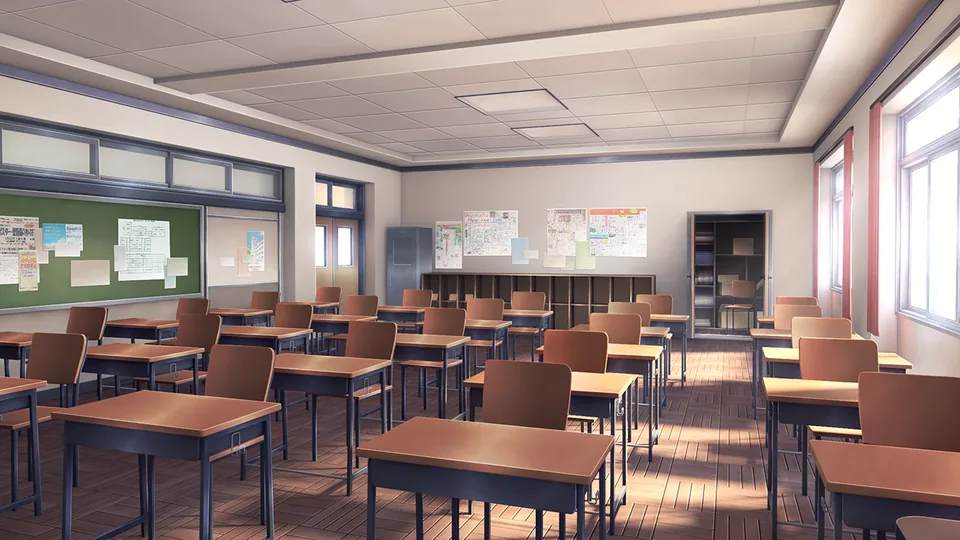
A scene can make a calm face read differently. Settle the place first, then judge the expression against it.
- Toggle the plain stage
Hiding the background isolates the silhouette and the pose. It is the fastest way to see whether a raised hand or a tilted head is doing the work.
- Try the same letter on two members
Note the letter, switch the character and compare. The contrast shows how much of the expression belongs to the drawing rather than the label.
- Send the final combination onward
The link under the stage opens the dialogue generator with the character, face, pose and background already selected. The line is untouched, so replace the starter sentence before exporting.
Four comparisons worth making
One change at a time is the only way to know which part of a sprite is doing the work.
- Same face, both poses
Change only the pose and watch the silhouette. On Sayori, the lifted hands carry more of the expression than the letter does.
- Same pose, two backgrounds
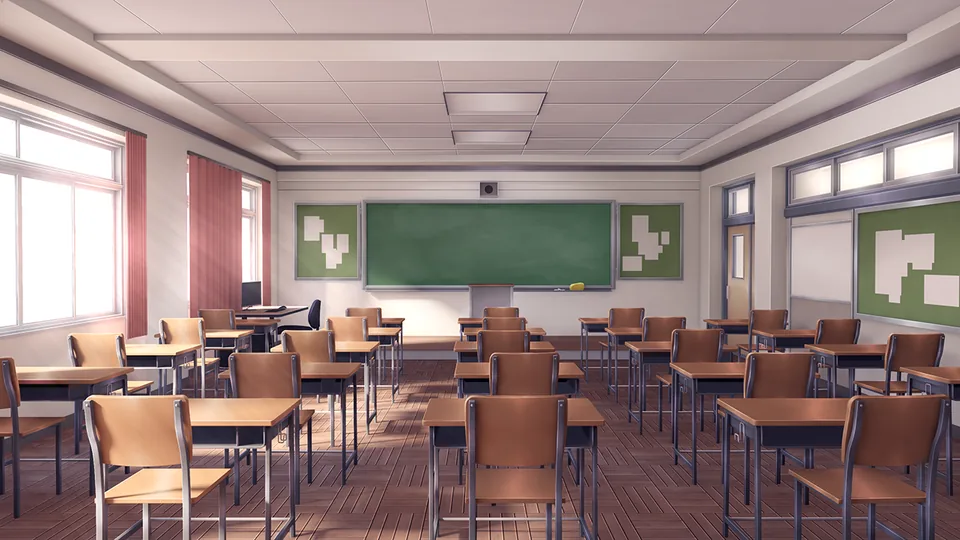
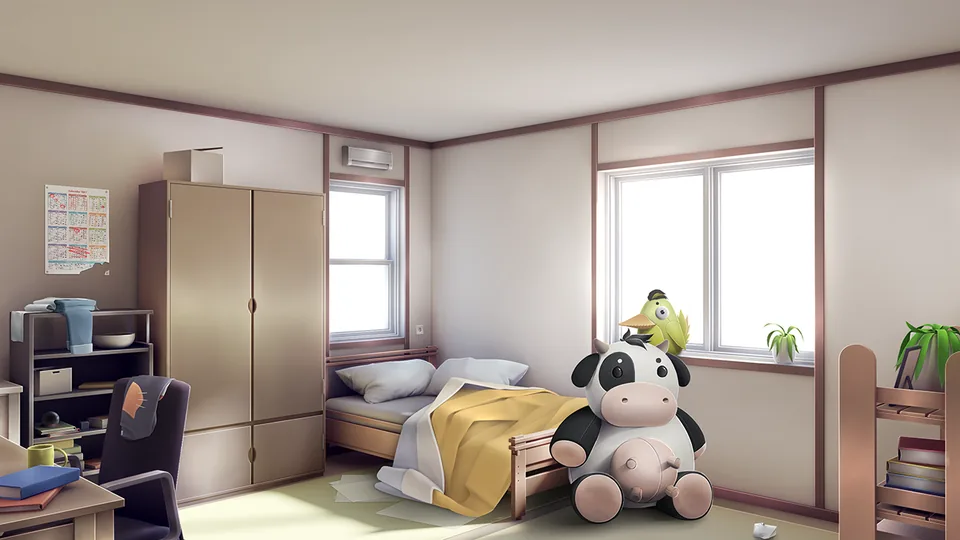
A classroom and a bedroom give the same sprite a different read. Settle the background before judging the face.
- Same letter, two members
Compare C on Yuri and C on Natsuki. The letter marks an art layer, not an emotion shared by the cast.
- Scene versus plain
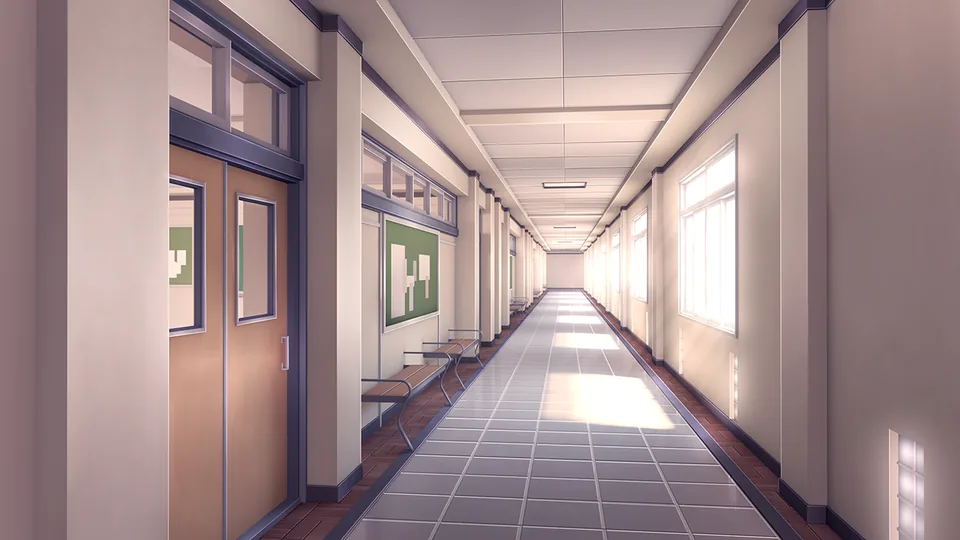
Hide the background to judge the outline, then restore it to judge the color and mood around the character.
The link carries four settings
A generated address stores the character, the face letter, the pose number and the background. Opening it fills those four choices in the generator, so a pose found here does not have to be rebuilt by hand.
The line, the frame shape and the second character are not part of that link. Those belong to the scene you are writing, and the generator keeps its starter sentence until you replace it. The prefill also fills the left slot, so a pose meant for the right side needs that slot set up after the generator opens.
Where the art stops
The viewer holds the official dialogue art: 36 sprites across four members, six faces each, with the second body layer only where the game has one. It does not include distorted faces, injured versions, secret-poem art or story CGs.
That limit is deliberate. A viewer that showed every variant would spoil late scenes and turn a comparison tool into a gallery of moments players should meet in context. The art is also unchanged: nothing is recolored, redrawn or generated, and there is no download button for the sprites themselves.
The ordinary layers are also the ones a dialogue scene needs. A staged frame is about a face and a line, not about a late-story reveal, so six letters cover almost every calm exchange you might want to build.
Backdrops that change the read