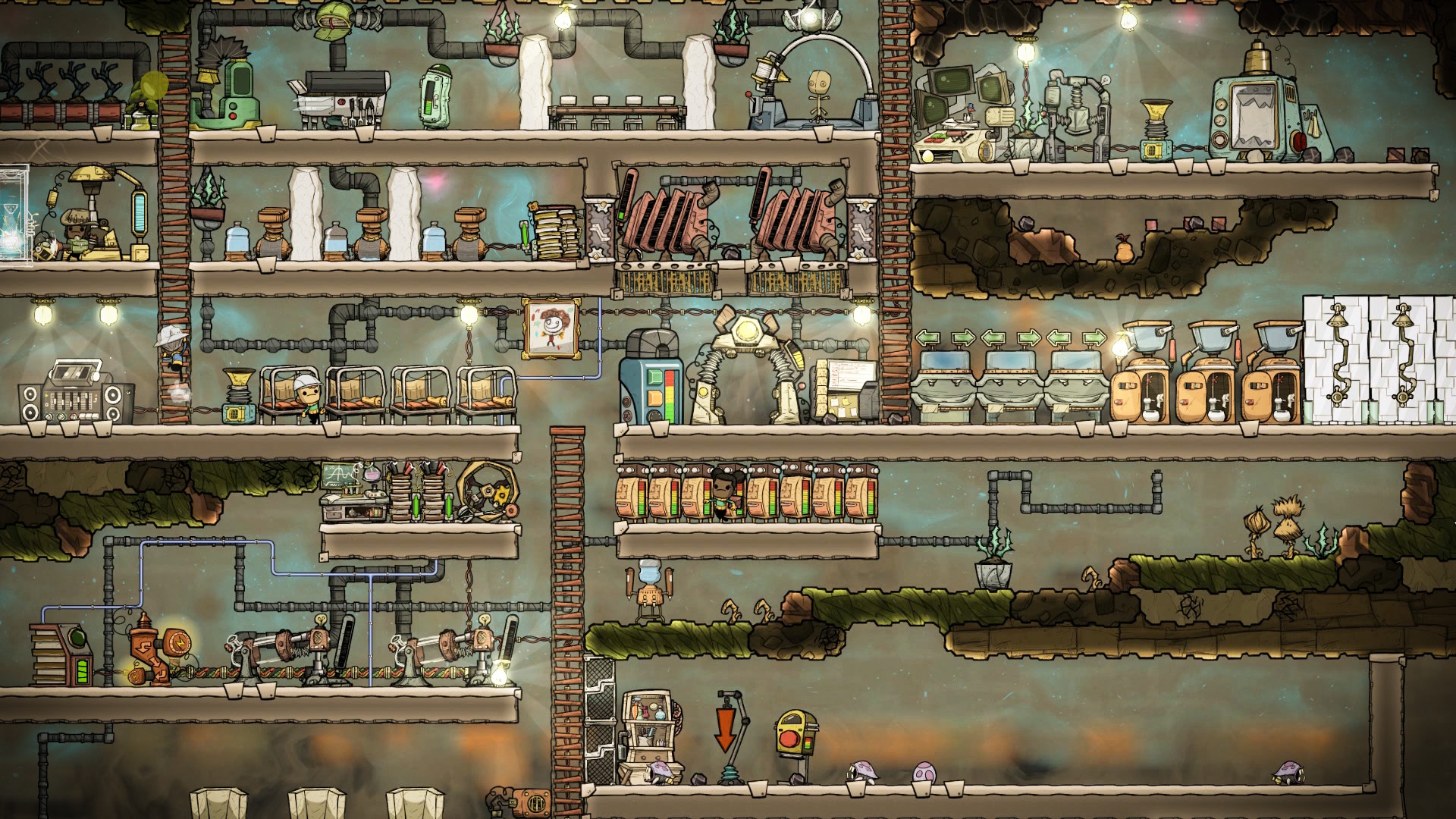
The wire is the limit
Wire comes in four ratings: 1 kW, 2 kW, 20 kW and 50 kW. The rating is the sum of the consumers on that circuit, not the generator output. A 1 kW wire with a 1.2 kW aquatuner will burn even if a battery is feeding it.
Use a heavy-watt backbone between the generators and the transformers, then drop to 1 kW or 2 kW inside each room. A transformer passes 4 kW to the circuit behind it. That keeps the high-current section short and the room circuits easy to change.
Generators and fuel
A Coal Generator burns 1 kg/s for 600 W and produces 12 kg CO2 per cycle. A Natural Gas Generator burns 90 g/s for 800 W, produces 40.5 kg polluted water and 13.5 kg CO2 per cycle. A Hydrogen Generator burns 100 g/s for 800 W and produces no exhaust.
A SPOM’s hydrogen generator covers 800 W of an 840 W load. It is not a self-powered base; it is a partial offset. The remaining 40 W, plus lights and filters, has to come from somewhere.
Batteries are buffers
A basic battery stores 10 kJ, which is ten seconds at 1 kW. A smart battery stores 20 kJ and has automation ports. They smooth generator cycling and cover a short fuel gap; they do not run a base overnight.
A smart battery at its upper threshold shuts the generator off. If the base loses power while the battery is full, the problem is the wire or the transformer, not the fuel.