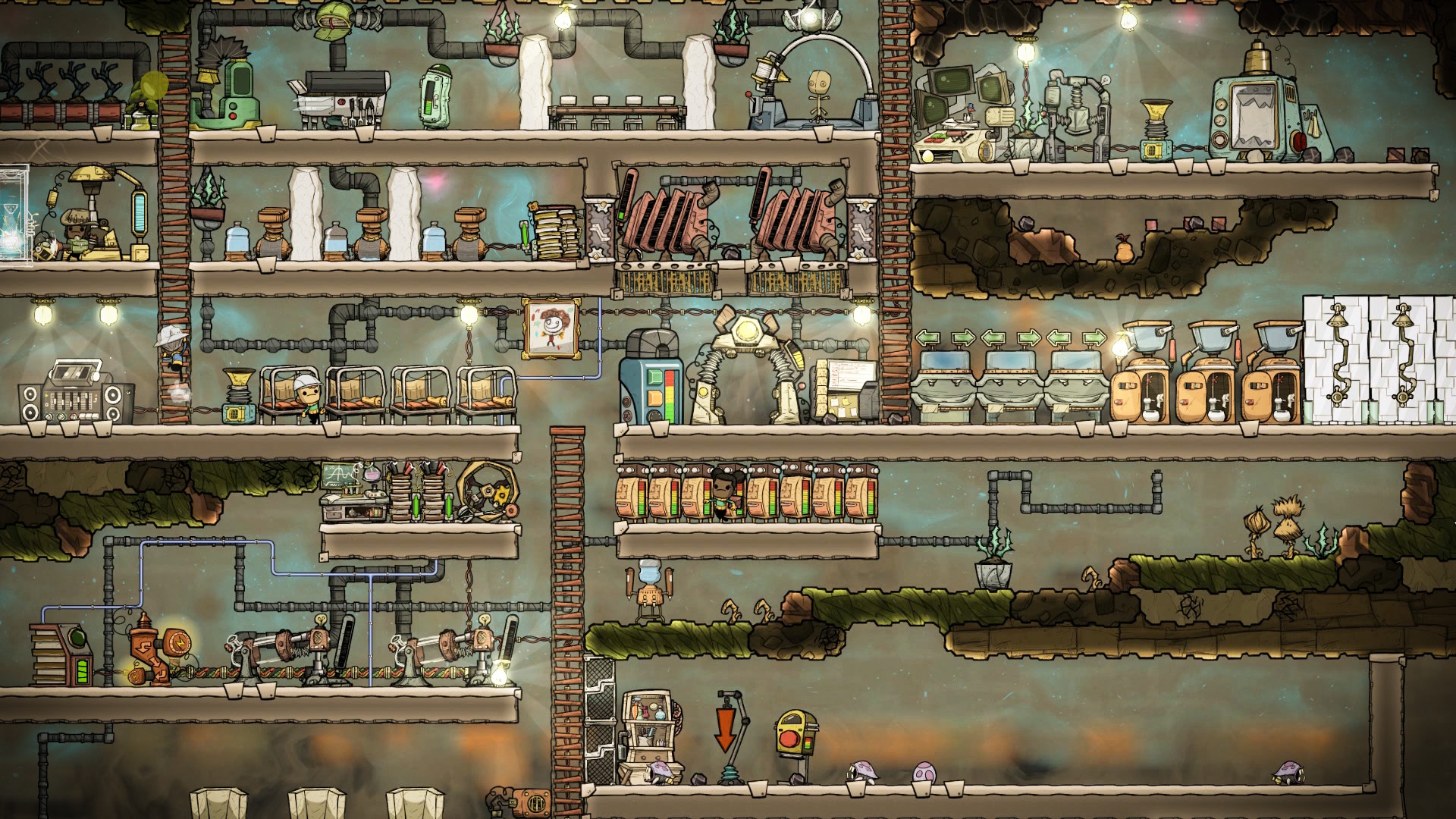
Machines in the block
The block runs 4 recipe lines at full duty. Cool the block for 68 kDTU/s before adding more machines.
Inputs per cycle
Outputs per cycle
Machine lines
| Machine | Count | Power | Heat | Output |
|---|---|---|---|---|
| Metal Refinery · Steel | 1 | 1,200 W | 16 | 1.5 t |
| Kiln · Refined Carbon | 1 | 0 W | 4 | 1.5 t |
| Rock Crusher · Lime | 1 | 240 W | 16 | 75 kg |
| Polymerizer · Plastic | 1 | 240 W | 32 | 300 kg |
Power and heat before output
A refinery and a glass forge each draw 1,200 W. A polymerizer adds 32 kDTU/s and a crusher 16. The industrial block is a power and heat project before it is a production line.
Where the inputs come from
Steel needs iron, refined carbon and lime. Refined carbon comes from coal, lime from egg shell, and iron from iron ore. The Resource Chain Planner expands the raw bill.
Keep it out of the living wing
Put the block at the edge, behind an insulated wall and a liquid lock. Give it its own cooling loop and exhaust. The corridor should not carry refinery heat into the bedrooms.
The block’s power and heat are the first limits
A Metal Refinery and a Glass Forge each draw 1,200 W and add 16 kDTU/s. A Polymerizer draws 240 W and adds 32 kDTU/s; a Kiln is manual and adds 4; a Rock Crusher draws 240 W and adds 16. The block’s power and heat are a separate budget from the production line.
The planner assumes full duty: every machine runs continuously. A refinery waiting for coolant or a polymerizer waiting for oil is below these numbers. Use the result as the ceiling for the wire and the cooling loop, then add the storage and the delivery that keep the machines fed.
- Refinery: 1,200 W / 16
- Glass Forge: 1,200 W / 16
- Polymerizer: 240 W / 32
- Crusher: 240 W / 16
Common questions about this tool
Why does the industrial block need its own cooling?
A refinery adds 16 kDTU/s, a glass forge 16, a polymerizer 32 and a crusher 16. Together they overwhelm a loop sized for the living area.
How much power does a refinery need?
1,200 W. A glass forge also draws 1,200 W; a polymerizer 240 W; a kiln is manual and draws no power.
What does a Polymerizer output?
500 kg crude oil per cycle becomes 300 kg plastic, 5 kg steam and 5 kg carbon dioxide.
Can I put the industrial block inside the base?
No. Put it at the edge, behind an insulated wall and a liquid lock, with its own cooling and exhaust.