Pick the monster in front of you, then the job. Escaping, fighting, reviving and carrying an idol want different faces. The result below uses the monster’s tell and the dice you actually have; if you have not added any dice yet, it suggests the roles to look for.
Build the counter
20 monsters · 20 special diceAdd the dice in your hand optional — open only if you want the result matched to your dice
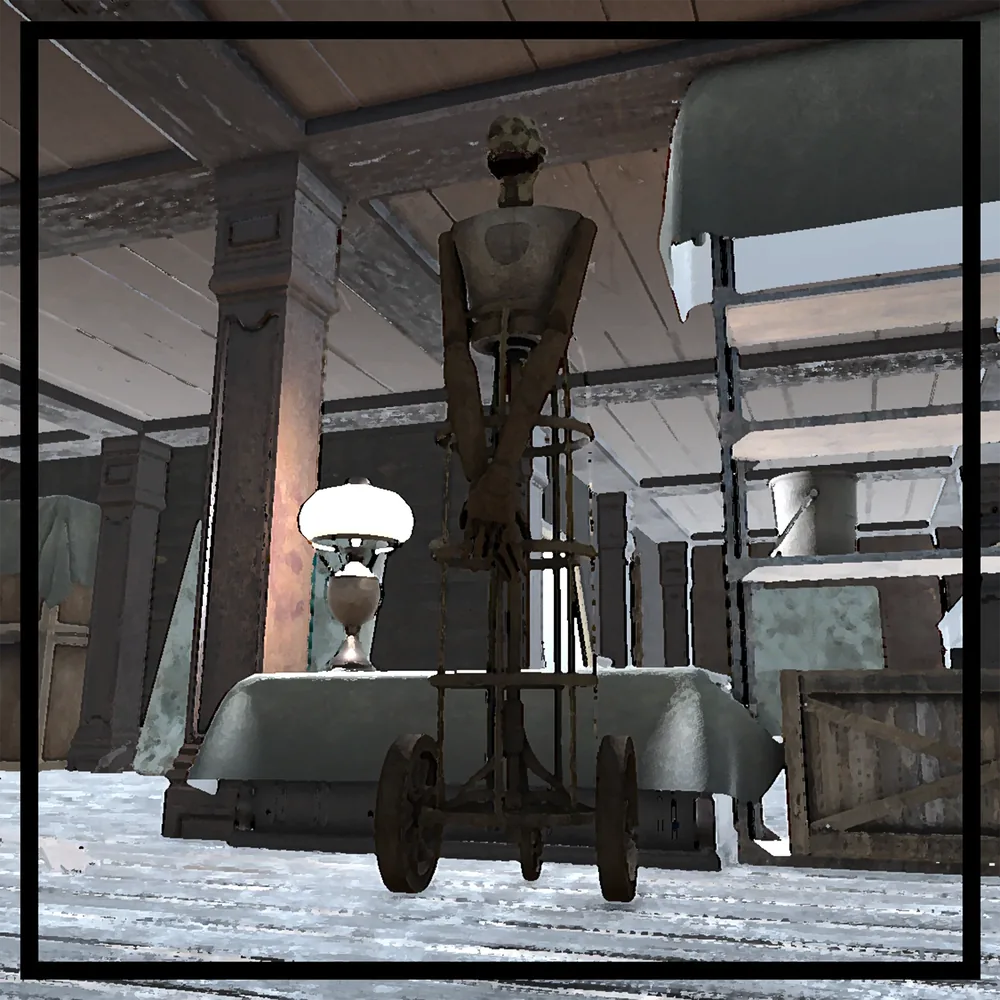
Against Mannequin
What to bring: Cocoon Die · Teleport Die · Freeze Die
Why: Mannequins hold still while watched and move when the camera or your character looks away. The attic variant fills a tighter room with more statues.
Not the fix: A damage die does not open the exit. Use control or mobility first, then fight only if the monster blocks the route.
Do this first
- Back out of the room with the nearest statue in view.
- Use a doorway to break sight only for the turn you need.
- Cocoon or Freeze a statue that blocks the exit, then leave it behind.
Do not
Turning your back to search a shelf or open a lock.
Roles this job wants
Control · Mobility · Escape · Stealth
Board warning: “Red light, green light. They want to play They know when you're looking away”
How the advice is built
- The monster’s job. A pursuit monster wants control or escape; an ambush wants the route cleared; a sound hunter wants stealth, which no die provides.
- Your job. Escaping and reviving score mobility and support higher than damage. Fighting scores damage first, then control.
- Your hand. Selected dice get priority. If none match, the advisor shows the roles to look for instead of pretending you have an answer.
Choose the job
Escape, fight, revive or carry
The same monster needs a different die depending on what you are trying to do. The picker starts with the job because a damage die that clears a room is not an answer to a chase, and a control die is not an answer to a downed player across the map.
| Job | What it needs | Dice roles | Common mistake |
|---|---|---|---|
| Escape | A window to leave, not a kill | Control, mobility, escape | Fighting in the open because the monster is close. |
| Fight | Clear the room or cut a grab | Damage, control | Using a damage die on a look-away or sound rule. |
| Revive | Reach the body and get both players out | Support, control, mobility | Reviving in the open with the monster still hunting. |
| Carry idol | Protect the carrier and keep the route home | Control, escape, support | Letting the carrier lead the group through a door. |
Monster families
The tell tells you the family
The counter does not need every stat to be useful. It needs the family: what the monster reacts to and what the board expects you to stop doing.
| Family | Monsters | First move |
|---|---|---|
| Pursuit | Mannequin, Mr. Horseman, Yeti | Keep the route behind you open; control the charge. |
| Ambush | Spider, Carnivorous Plant, Mimic Door, Crocodile | Check the ceiling, floor and door before committing. |
| Sound | Hunter, Sand Worm | Walk, distract, break line; no die makes you silent. |
| Timer | Penguin, TV Ghost | Find the fuse or the tape before you fight. |
| Mimic | Snowman, Parrot | Watch behaviour and confirm the voice before acting. |
| Grab | Climber, Pharaoh | Keep furniture between you and the pull; move when caught. |
| Impostor | Cursed Player | Stay in pairs and confirm every call in person. |
| Swarm / Hazard | Bee Swarm, Wandering Dice | Walk out or leave the reward; do not swat or chase. |
Limits
What the counter does not claim
The advice is a tactic, not a hidden stat sheet. Use it to choose the next action; do not treat it as a promise that a die will kill every monster.
- No exact health or damage numbers. The game does not show fixed health or damage numbers for every monster.
- No silent die. A sound hunter is beaten by walking and breaking line, not by rolling higher.
- No guaranteed kill. Cocoon, Freeze and Thread buy a window; they do not remove the monster from the board.
- No fixed room order. The counter works on the monster in front of you, not on a memorised route.
Why does the result appear before I add dice?
The monster and the job already determine the tactic. Adding dice only refines the hand; you should not have to fill a full inventory before getting an answer.
What if none of my dice match?
The counter says so and keeps the role suggestion visible. Add a control, mobility or support die, or use the monster’s first move without a special die.
Does the counter use my board difficulty?
No. Difficulty changes the event list and pressure, not the tell. The monster reacts to the same sense or trigger on every band.
What is the best die against a sound hunter?
No die makes you silent. Walk, throw a distraction away from the route and break line; a mobility die only helps after the hunter has lost the trail.
Five-second read
What to look at before choosing a die
You do not need the monster’s name to start. Look at the body, the warning and the first action: a floating mannequin, a ceiling spider and a banker holding gold all announce different jobs.
| What you see | What it means | What to reach for |
|---|---|---|
| It stands still while watched | Sight rule; it moves when you look away | Keep it in view; control only for the door. |
| It drops from the ceiling | Ambush; the floor under the web is the trap | Move first; Cocoon or Freeze if it blocks the route. |
| It fires at a sound | Sound rule; sprinting and reviving give it a target | Walk, distract, break line. |
| It follows the idol carrier | Idol rule; the objective is the bait | Drop the idol, let it pass, control the carrier’s route. |
| It copies a player voice | Mimic; do not trust a call from another room | Confirm in person; keep the parrot in view. |
| It starts a fuse or tape | Timer; the room is the clock | Reach the trigger or exit before fighting. |
When no dice match
Walk, group and use the room
The counter is allowed to say no. If none of your dice fill the required role, the best answer is often a movement rule, not a die: walk instead of sprinting, put a wall between you and the hunter, drop the idol, or leave the room before the timer ends.
- No control die: keep a door or a corner between you and the monster; do not fight for the sake of using a die.
- No mobility die: clear the route before you pick up the idol, and do not cross a gap with a chase behind you.
- No support die: revive only after the monster has lost the trail; a revive in the open can put two players in the same trap.
Using the result
Say the trigger, set the exit, then roll
The result is only useful if the team acts on the same rule. Call the trigger before anyone spends a die, set the exit before the chase starts, and decide who is carrying the idol before the route home matters.
- Say the trigger out loud. “It hears sprinting” or “it moves when you look away” tells every player what to stop doing.
- Set the exit first. A control die without a route only delays the monster; a route without control still gets the team out.
- Assign the carrier. If the idol is already in hand, the carrier does not lead and does not open the door.
- Roll after the plan. Use the die to protect the route, not to start a fight the team has not chosen.
When to leave instead: the tape or fuse is nearly finished, two players are down, the only control die is already spent, or the idol carrier is between the monster and the exit. A room you can leave is worth more than a monster you can almost kill.