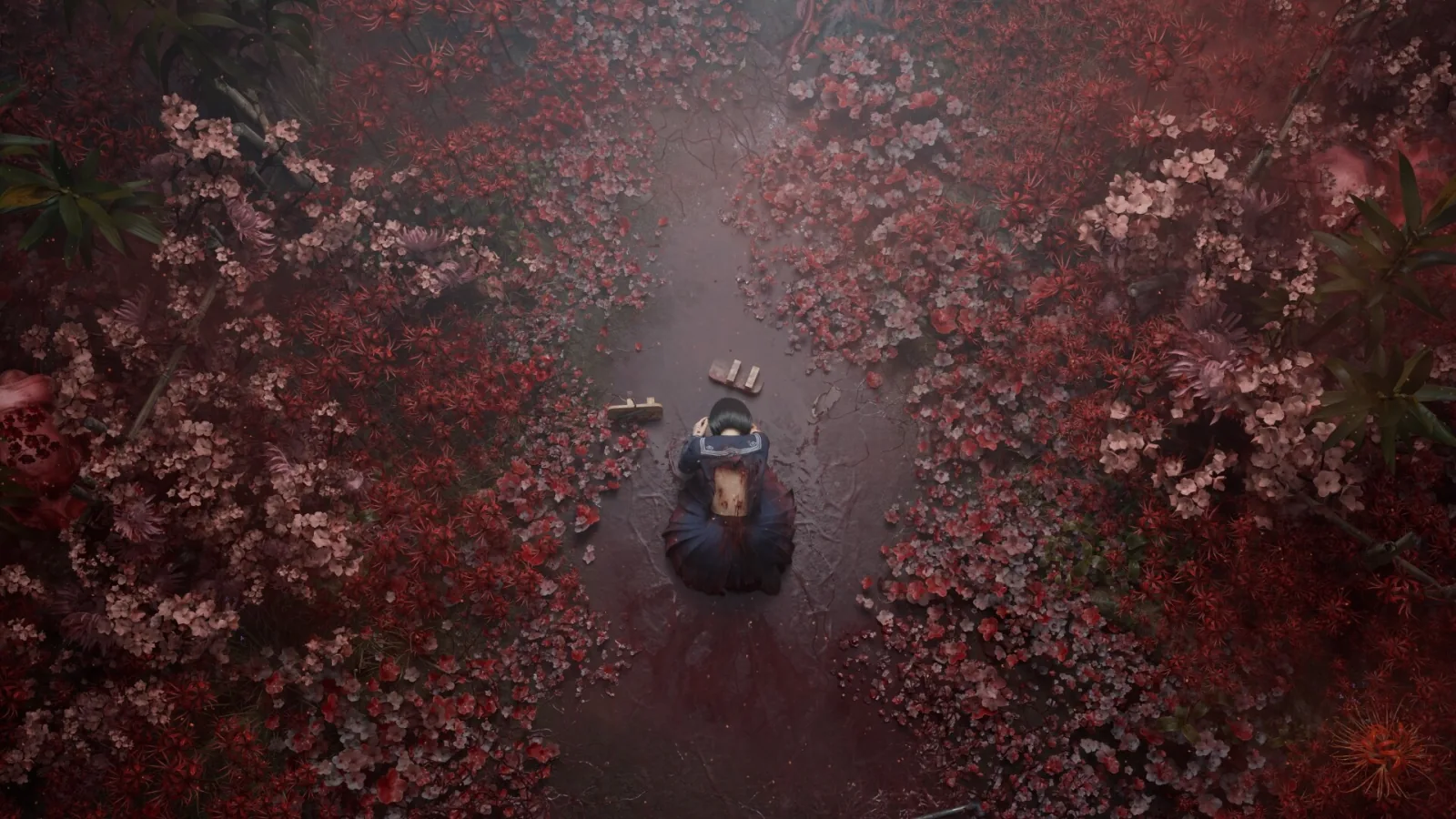
Silent Hill f is the story of Shimizu Hinako, a 1960s schoolgirl in the mountain village of Ebisugaoka, who is being pushed into an arranged marriage while the shrine, her family and the fox god close in around her. The five endings answer the same question differently: whether Hinako can choose her own life.
The setting
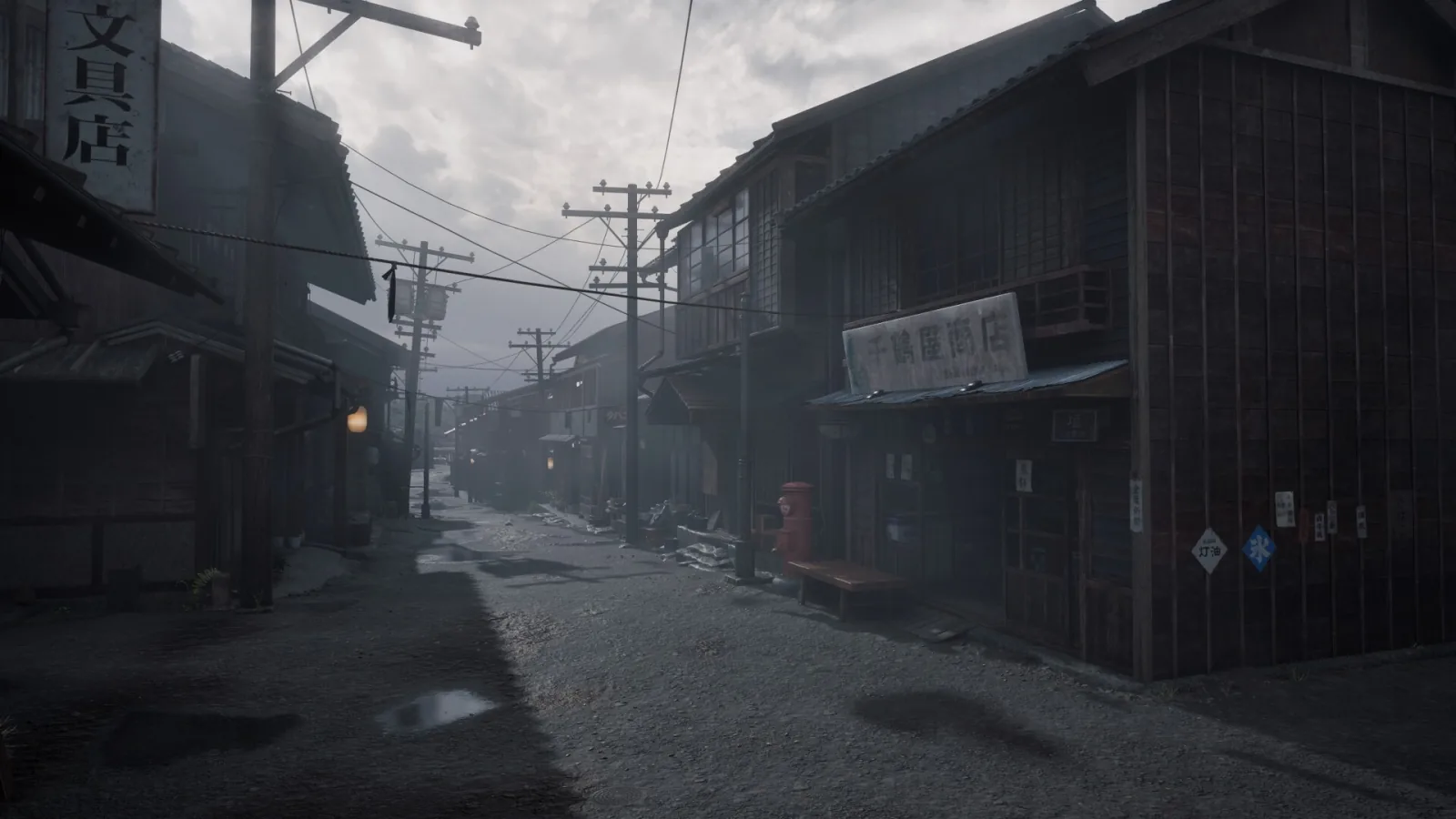
Ebisugaoka is a small village built around the Sennensugi Shrine and its Inari-sama. The village keeps its own folklore: a sacred sword buried under a divine tree, five Jizo statues that seal it, and a fox deity whose followers were “stolen” by newer worship. The story takes place over a few days around Hinako’s arranged marriage.
The people around Hinako
Fox Mask
A mysterious man who wears a fox mask. He never takes it off, so I feel I have yet to see his true self. He has such a refined air about him; I think he must come from a very well-off family.
Shimizu Hinako
Me. There's not a single extraordinary thing about me. Except maybe being tall for a girl my age.
Kinuta Junko
My older sister. She's one of the prettiest and kindest people I know, and there's nothing she can't do. I can rely on her for anything. Honestly, she's the greatest sister anyone could ask for.
Shimizu Kanta
My father. When I first learned of the term "patriarchal husband" and that it meant a man who does nothing but boss his wife around, he was the first person to come to mind.
Shimizu Kimie
My mother. If I had to choose one word to describe her, it would be... pitiful. She's the one who bears the brunt of my father's violent moods and malicious abuse.
Nishida Rinko
One of my friends. She's really put-together, but can be a little inflexible in how she does things sometimes.
Igarashi Sakuko
One of my friends. She's always got her head up in the clouds and is a little strange.
Iwai Shu
Shu's been my best friend since forever; he's my partner. We've been having play dates for as long as I can remember. When we played make-believe Space Wars, we'd call each other "partner," and for some reason, it just kind of stuck. Kids of the Showa era tend to look down on the other sex, but never Shu. When I rebelled against my parents because they told me to act like a girl, he was the one who understood my feelings the most and stood by me.
The shrine and the sword
The village’s older faith is built on the sacred sword and the five Jizo. When lightning split the divine tree, worship moved to the Inari statues, and the sword was left sealed. The notebook’s folklore entries explain the chain: the sword’s resentment, the Jizo barrier, the kishu custom of retiring old tools, and the Inari-sama that replaced the older god.
The Sacred Sword is therefore both a weapon and a claim on the village’s history. Purifying it accepts the older faith; leaving it unpurified leaves the resentment intact.
What the endings mean
| Ending | What it resolves |
|---|---|
| Coming Home to Roost | The first completion; Hinako’s self-doubt closes the story. |
| Fox's Wedding | The fox route; the doll imagery and the Agura no Hotei-sama belong to it. |
| The Fox Wets Its Tail | The sword route with the blade left unpurified; a hell of Hinako’s own choosing. |
| Ebisugaoka in Silence | The “true” ending; two full endings, a purified sword and the brooch offered. |
| The Great Space Invasion! | A separate joke route about the Space Army; it does not resolve the family story. |
What the game leaves open
- The exact nature of the fox god is described through folklore and visions rather than a single explanation.
- Fox Mask’s identity is implied by the story and documents, not announced by the game.
- The UFO ending is outside the story’s logic and does not answer any of its questions.
It sticks to what the notebook, the documents and the ending list say. Where the game only implies something, the story section says so instead of filling the gap.