Story explained · spoilers
Slay the Princess story and lore explained
Who the Narrator is, what the Princess actually is, why the woods reset, and what the endings mean. This page discusses the whole game, including the Pristine Cut.
The short version
You are not a person. You are the Long Quiet, one half of a pair of cosmic forces. The Princess is the Shifting Mound, the other half: change, death, and everything that comes with them. The Narrator wants you to kill her so that the world can exist without change. He traps you in a loop and tells the story as if it were a simple task.
Every time you meet her, the way you treat her changes what she becomes. Those forms are the vessels. At the end of everything, the Shifting Mound gathers them and asks you what you want the world to be. The endings are your answer.
The Narrator
The Narrator is not the villain of a monster story. He is a being trying to solve a problem: the world he loves is defined by change, and change means loss. He builds the woods, the cabin and the loop, and he writes the role you are supposed to play. His instructions are consistent because he needs the story to keep moving toward the same conclusion. When you refuse the cabin, he does not attack you; he tries to talk you back, then lets the world end.
The Princess and the Shifting Mound
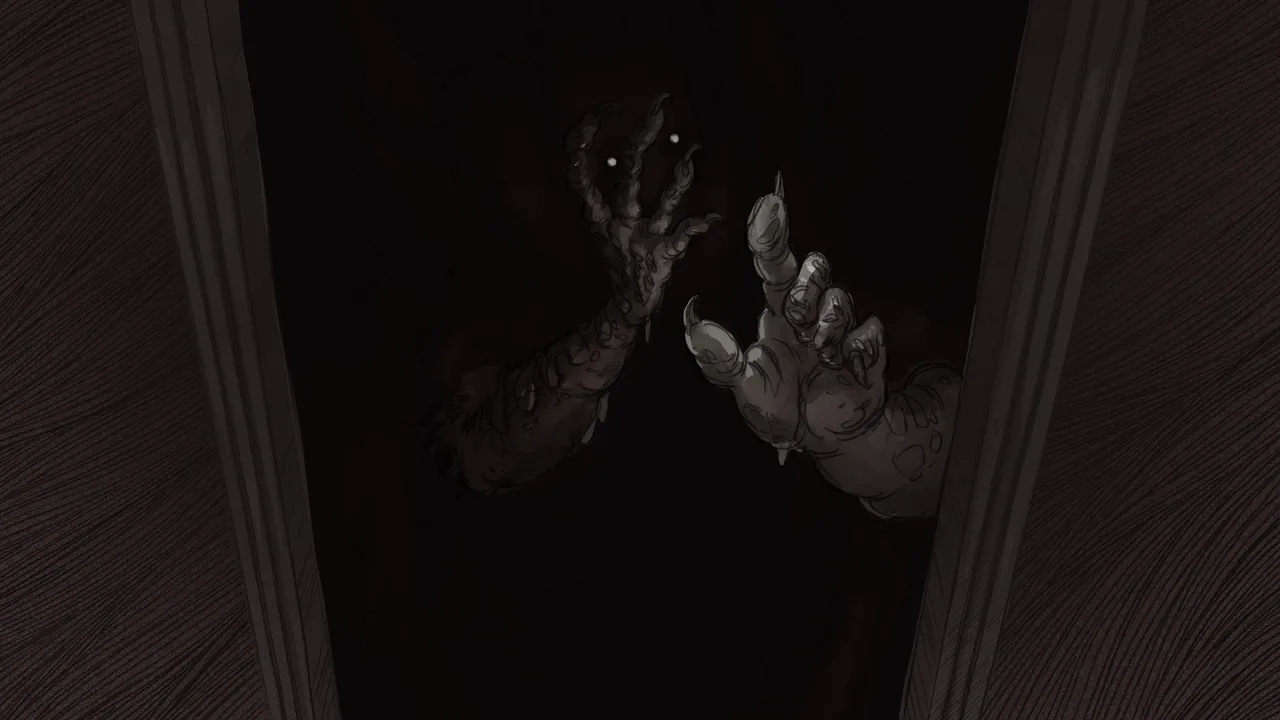
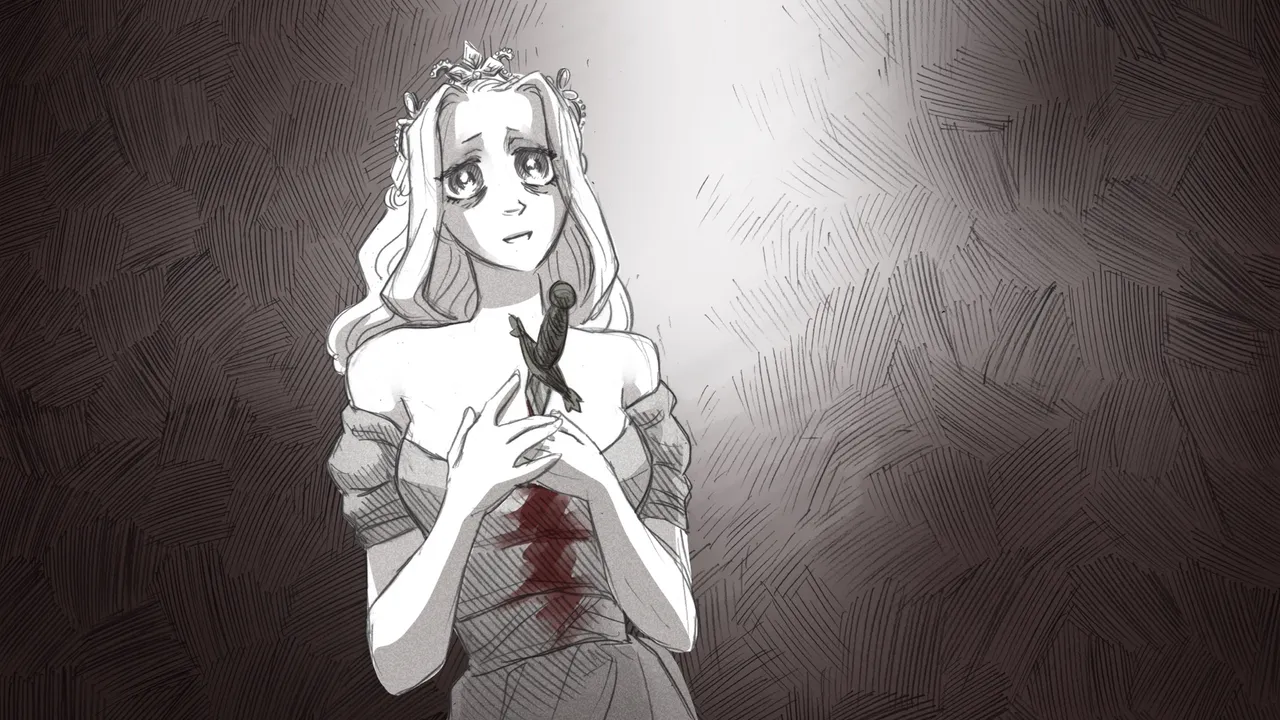
The Princess is not a single person. She is the Shifting Mound wearing a shape the story can use. Each route is a different answer to the question "what is she?", and each answer gives her a different form. The Adversary is conflict, The Damsel is devotion, The Witch is distrust, The Stranger is the version you were never supposed to meet. The chapter names are the game telling you what each route is about.
The Hero and the Voices
The Voices are not outside characters. They are parts of you that a route makes loud enough to speak.
The Hero is the part of you that still wants to do the right thing, and he is there from the first line. The other Voices appear when a choice creates them: the Stubborn when you refuse to stop fighting, the Skeptic when you question the Narrator, the Smitten when you trust her, the Cold when you kill without feeling. That is why two runs through the same cabin sound different even when the room looks identical.
Why the loop repeats
The replay is not a game-over screen. It is the argument continuing.
Each run gives the Shifting Mound another answer to the question of what she is, and each answer is a vessel. The Narrator needs the loop to keep producing the same conclusion; the Princess needs it to keep becoming something new. You are the only part of the pair who remembers enough to change the answer, which is why the woods reset but the choices accumulate. The endings are what happens when the two of you finally run out of ways to avoid the question.
The Long Quiet and the loop
The Long Quiet is the player's side of the pair: stillness, the observer, the one who keeps being asked to choose. The loop exists because the two halves cannot resolve their argument in one conversation. Every vessel is an argument the Princess makes, and the final chapter is where all of them are present at once.
What the endings mean
There is no single canon ending; the game is built around the choice. The endings page covers the mechanical requirements, and this section covers the ideas.
Destroy her
You accept the Narrator's premise that a world without the Shifting Mound is better. The new dawn is real, and so is everything that was lost to make it.
Leave with her
You refuse the choice between the Narrator's world and hers. Leaving together is not an escape from the argument; it is a decision to keep having it.
Refuse the ending
The game is aware that it is a story about endings. Some final choices turn the loop into the point rather than a problem to solve.
Your New World
The Pristine Cut ending. You choose violence in every vessel round, defeat her alone and destroy her, and the result is a world free from death. It is the answer the Narrator wanted, reached without his help and without hers.
Story questions
Is the Narrator evil?
The game does not settle it. He is trying to save a world in the only way he believes works, and the cost is a person who did not agree to the plan.
Is the Princess the villain?
She is the force the story blames. What she does in a route depends on how you treat her, which is the point of the ten forms.
Are the endings canon?
No single ending is treated as the only truth. The game is built to be replayed, and the Memories gallery treats every route as content to collect.