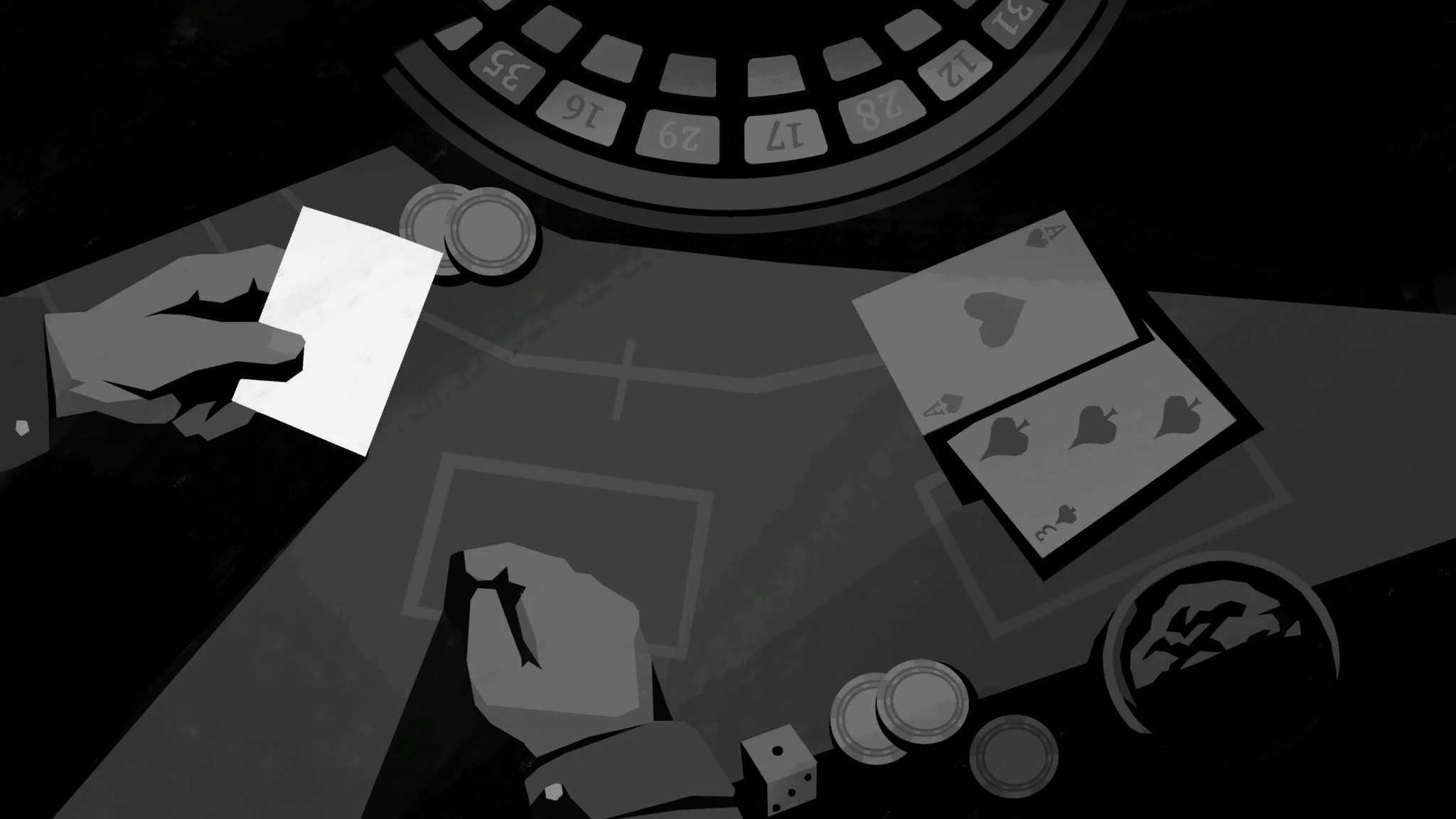
House is really Evil and classified as Traitor. The role shown during investigation can be different, so do not use the display as the classification.

EvilTraitorCasinoNo clue
The hardest Evil roles. Their abilities change the board, the evidence or the cost of finishing the case.
The short read
House is actually Evil and classified as Traitor. Yes — lying is its default. Pretends to be a not-in-play role. Does not give a clue.
Actual roleHouse
AlignmentEvil
ClassificationTraitor
RegionsCasino
Earliest tierCasino 1
ClueNone
DisguiseYes
Where it appears
Where House can appear
Earliest tier by region: Casino 1. This shows where the role can appear; it does not guarantee the role is in this case.
What the card says
What House does
All chips costs are increased by 50% until I am arrested or killed. I lie and pretend to be a suspected not in play role.
The part players miss
The House raises every chip cost
The House increases all chip costs by 50% until it is arrested or killed. In the Casino, that changes both investigation and good-role arrest prices.
- Add 50% to the current chip cost before you decide whether an investigation is affordable.
- The increase ends when The House is arrested or killed.
- A cost that looks wrong can be the House, not a missing chip.
Reading the role
How to test House without guessing
Do not use one statement as a verdict about House. House gives no clue at all, so the board effect is the only evidence you have. These are the checks that separate the role from its current state.
Pretends to be a not-in-play role. If the shown role is the reason you are suspicious, check the role that is actually being displayed and whether that role can be copied.
House does not give a clue. Judge it by the ability or board change it creates, not by silence.
House is Evil. Yes — lying is its default. An Evil role can tell the truth, and a Good role can be forced to lie by taint.
House can appear in Casino from tier 1. If you are in another region, do not treat its absence as evidence.
Two ways to meet it
Is House the role shown, or the role underneath?
House can be used as a cover. The name on the investigation is a claim about display, not proof of the actual card. Check the source of the reveal before you arrest.
House gives no clue. Its value is the board effect it creates, not the statement attached to it.
Same starting group
Roles that often appear with House
House is grouped with Pickpocket, Priest, Weatherman, Informant, Hot Shot, Opportunist, Cashier in the starting set for Casino. Sharing a group is not a rule interaction; use it as a starting point, not proof that both are in your case.







Role relationships
Roles that change how House reads
No other role is named directly on this card. The interaction is more likely to come from taint, a disguise or a board effect than from a fixed pair.
Still contradictory?
Put House next to the other role
Set House against the role named on the card and compare three things: the actual card, the role the board displays, and the state you can check now.

House questions
Is House Good or Evil in Dupery?
House is actually Evil and classified as Traitor. Its actual card is the starting point, not the role it might display during the case.
Does House lie?
Yes — lying is its default. A lie makes the statement unreliable, not the role Evil; taint can force even a Good role to give a false clue. Check the current state before treating the answer as proof.
Does House give a clue?
Does not give a clue. All chips costs are increased by 50% until I am arrested or killed. I lie and pretend to be a suspected not in play role.
Where can House appear?
House can appear in Casino from tier 1. That is the regional list, not a promise that the role is in the current case.
What should I check before arresting House?
House gives no clue, so the arrest needs a board effect or evidence from another role. The shown role can also be a cover, so separate the display from the actual card.
What changes if House is tainted?
Taint makes the statement false without changing House or its classification. This role has no clue to taint, so look for another source before changing your read.